
Renewable Energy and the Future of Bitcoin Mining: A GreenBTC.Club's Perspective
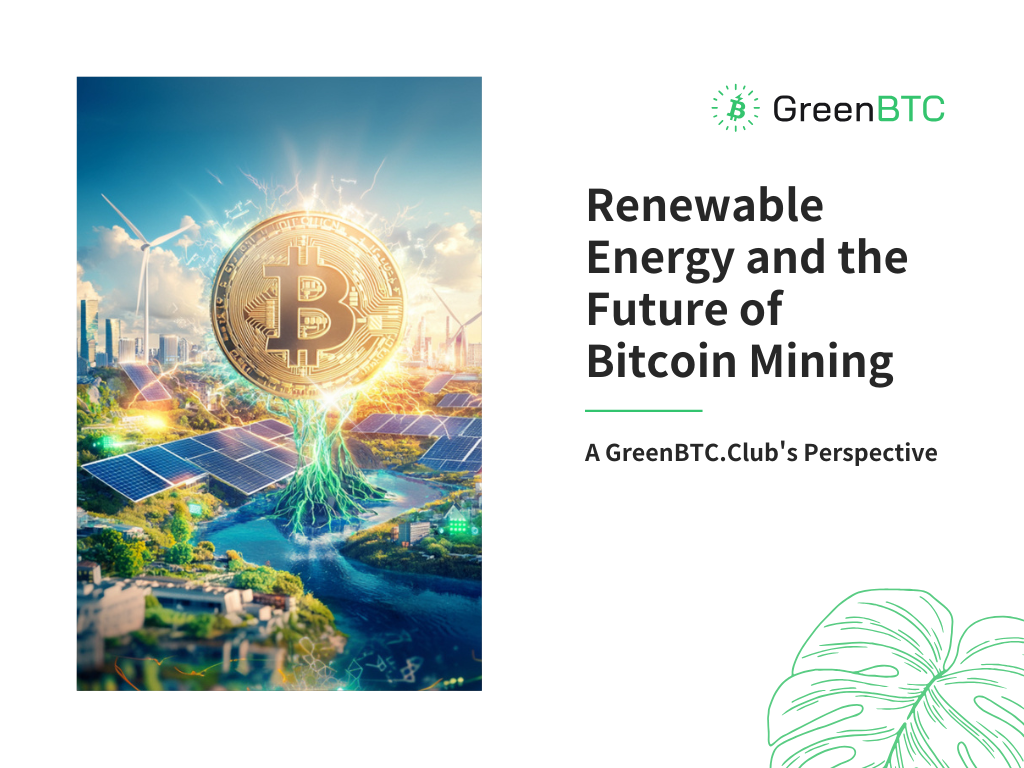
Bitcoin mining has evolved into a global industry, fueling a decentralized financial ecosystem while sparking debates about sustainability and energy consumption. Historically powered by fossil fuels, mining is undergoing a transformative shift towards renewable energy sources. As technology advances and grid systems modernize, mining operations that harness solar, wind, hydro, and wave energy are emerging as viable solutions for balancing profitability with environmental responsibility. GreenBTC.Club explores the trajectory of these sustainable alternatives and how they will shape Bitcoin mining over the next five years.
"The intersection of Bitcoin mining and renewable energy isn’t just an emerging trend—it’s an inevitable transformation. As technology refines efficiency and global energy systems evolve, sustainable solutions like solar, wind, hydro, and wave power will redefine how Bitcoin secures its network. The future belongs to those who harness energy intelligently, decentralizing both finance and power itself."
- Leo Lin, Co-Founder of GreenBTC.Club
Solar Energy: The Rising Giant in Mining Sustainability
Solar power is at the forefront of renewable energy adoption. As photovoltaic (PV) technology becomes more cost-effective, Bitcoin miners are increasingly turning to solar farms and residential solar setups to power mining operations. The advantages are clear:
• Scalability and Accessibility: From small-scale residential systems to large solar farms, miners can adapt solar integration based on their needs.
• Battery Storage Synergies: Paired with energy storage solutions, excess solar power can be efficiently allocated for mining during non-peak hours.
• Regional Viability: Countries with high solar irradiance, such as Australia, Spain, and parts of the United States, are well-positioned for widespread adoption.
Over the next five years, improved solar panel efficiency and advancements in storage technology will drive deeper integration between mining and solar power. The decrease in hardware costs and incentives for decentralized energy solutions will further reinforce its role in sustainable mining strategies.
Wind Power: Harnessing Natural Forces for Bitcoin Security
Wind energy remains one of the most scalable and globally accessible renewable power sources. With advancements in turbine technology, wind farms are increasingly utilized by Bitcoin miners seeking cost-effective, zero-carbon solutions.
• High-Efficiency Generation: Modern turbines can operate at low wind speeds, making wind power viable across diverse geographical regions.
• Grid Integration: Wind energy can stabilize local power grids and supplement existing energy infrastructures.
• Global Expansion: Countries with consistent wind resources—such as Denmark, China, and the United Kingdom—are leading the charge in integrating wind power into Bitcoin mining operations.
While wind power is not always constant, its growing adoption alongside hybrid mining strategies—combining solar, wind, and battery storage—ensures consistent uptime for Bitcoin mining without reliance on conventional energy grids.
Hydropower: The Established Leader in Renewable Mining
Hydropower has long been a dominant force in Bitcoin mining, particularly in regions with abundant river systems and government incentives for clean energy projects. The benefits of hydro-based mining are substantial:
• Stable and Predictable Energy Output: Unlike solar and wind, hydro power provides consistent energy generation regardless of weather conditions.
• High Energy Efficiency: Modern hydroelectric facilities operate at an energy efficiency rate of over 90%, making them the most reliable renewable energy source for miners.
• Regional Advantage: Countries such as Canada, Norway, and China (Sichuan province) have historically been major players in hydro-powered Bitcoin mining.
Over the next five years, the expansion of micro-hydro projects will allow decentralized mining operations to access sustainable energy in remote regions, further supporting a diversified and resilient Bitcoin network.
Wave Energy: The Untapped Potential for Future Mining
Wave energy remains an underdeveloped sector of renewable power but carries immense potential for Bitcoin mining. By harnessing the natural movement of ocean waves, innovative mining operations can explore energy generation in coastal regions.
• Continuous Power Supply: Unlike solar and wind, wave power operates consistently, offering a stable energy flow.
• Emerging Technologies: Advancements in wave energy converters (WECs) could unlock new opportunities for offshore mining.
• Geographical Relevance: Coastal nations such as Japan, the United Kingdom, and Portugal have the potential to spearhead wave-powered Bitcoin mining initiatives.
While large-scale adoption of wave energy is still in its infancy, research and investment in ocean-based renewable technologies could position it as a crucial piece in the mining sustainability puzzle.
"The evolution of Bitcoin mining is tightly woven into the broader transformation of global energy systems. As industries pivot toward sustainability, the integration of renewables into decentralized networks is becoming less of an experiment and more of a necessity. The next five years will shape whether Bitcoin mining remains an opportunistic use case or develops into a structured element within intelligent energy infrastructures worldwide."
- Merlin M. Ostermann
The Next Five Years: Global and Regional Shifts Toward Green Mining
As Bitcoin adoption accelerates and energy infrastructure evolves, the next five years will see a marked increase in mining operations powered by renewables. Key global trends include:
• Government Incentives: Regions promoting clean energy through subsidies and policies will experience increased migration of Bitcoin mining operations.
• Hybrid Mining Models: The convergence of solar, wind, hydro, and battery storage will drive efficiency and reliability.
• Decentralized Energy Networks: Bitcoin mining will play a role in balancing power grids and contributing to localized energy independence.
GreenBTC.Club remains committed to exploring and advocating for sustainable mining solutions, ensuring Bitcoin remains both decentralized and environmentally conscious. By aligning economic incentives with renewable energy innovation, Bitcoin miners worldwide can contribute to a future where digital finance and sustainability go hand in hand.